What happens when a man with a tough childhood turns his struggles into a voice that defines an entire generation of rock music? Angry Anderson’s story offers a fascinating answer. Known for his powerful voice and fearless stage presence, he became one of Australia’s most recognisable rock singers. Yet there was much more to him than loud guitars and hard-hitting performances.
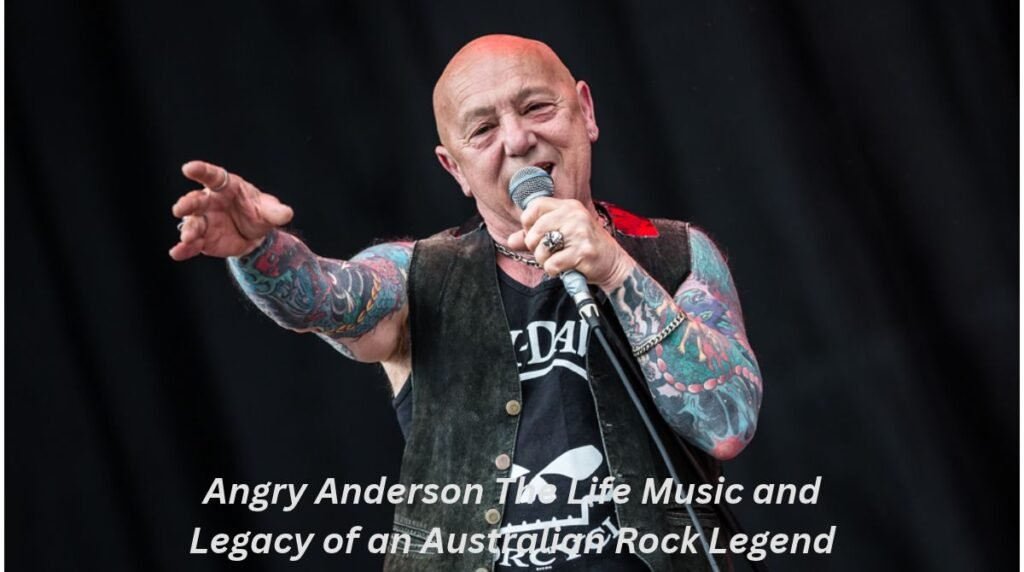
Gary Stephen Anderson, popularly known as Angry Anderson, built a remarkable career as a musician, actor, television presenter and youth advocate. He became famous as the frontman of Rose Tattoo and later reached a much wider audience with his emotional solo hit “Suddenly.” His journey included personal challenges, family heartbreak and years of public service. Following his death in September 2026 at the age of 79, his life and career remain an important part of Australian entertainment history.
Who Was Angry Anderson?
Angry Anderson was an Australian rock singer who gained fame for his distinctive voice and energetic performances. Born on August 5, 1947, in Melbourne, Australia, he grew up in the working-class suburb of Coburg. His background helped shape the determined personality that audiences would later recognise on stage.
Although many fans knew him for his aggressive rock image, Anderson explored several different careers throughout his life. He appeared in films and television programs and became involved in charity work. Furthermore, he used his public profile to support young people and raise awareness about social issues.
His nickname became closely connected to his identity. However, the man behind the name was more complicated than his tough public image suggested. He experienced painful moments in his early life and later spoke openly about how fatherhood changed his outlook.
How Angry Anderson Became a Rock Star?
Anderson’s musical journey began before he became associated with Rose Tattoo. During the early 1970s he performed with other groups and developed the raw vocal style that would eventually make him famous. One of his early bands was Buster Brown which helped him gain experience in Australia’s live music scene.
In 1976, Anderson joined Rose Tattoo. The group developed a powerful sound built around blues influences, heavy guitars and energetic performances. At a time when Australian pub rock was gaining popularity, Rose Tattoo stood out because of its uncompromising attitude and distinctive musical style.
The band’s early performances attracted devoted fans. Its members did not try to create a polished pop image. Instead, they delivered loud and direct music that connected with audiences who wanted something raw and authentic.
Their first album established the group as an important name in Australian hard rock. Over time, Rose Tattoo also attracted attention overseas and influenced musicians beyond Australia.
Rose Tattoo and the Songs That Made Him Famous
Rose Tattoo became the defining musical chapter of Anderson’s career. The group released songs that captured the rebellious spirit of Australian pub rock and earned a lasting place in the country’s musical culture.
“Bad Boy for Love” became one of the band’s best-known tracks. Its memorable rhythm and confident attitude helped establish the group’s identity. Meanwhile, “Rock ‘n’ Roll Outlaw” reflected the band’s rough-edged style and commitment to traditional rock energy.
Another important song was “We Can’t Be Beaten.” Its message of resilience connected with listeners and helped it become a lasting favourite among Australian rock fans. The band’s version of “Nice Boys” also attracted international attention through its later association with Guns N’ Roses.
Rose Tattoo’s influence extended beyond its own recordings. The group shared a connection with Australia’s wider hard-rock tradition and helped inspire musicians who admired its direct sound. In 2006, Rose Tattoo received induction into the ARIA Hall of Fame, recognising its contribution to Australian music.
The Unexpected Success of “Suddenly”
Could a singer famous for hard rock also deliver a romantic ballad that reached mainstream audiences? Angry Anderson answered that question with “Suddenly.”
Released in 1987, the song showed a softer side of his musical personality. Instead of relying on aggressive guitars and forceful vocals, it offered an emotional performance that appealed to a broader audience.
The song became especially memorable through the Australian television series Neighbours. It accompanied the wedding of characters Scott Robinson and Charlene Mitchell, helping the track reach viewers who might not have followed Rose Tattoo.
As a result, “Suddenly” became one of Anderson’s most recognisable solo recordings. It demonstrated his ability to move between musical styles without losing the distinctive voice that made him stand out.
The song also helped introduce him to a new generation of listeners. Even people unfamiliar with his rock career could recognise the emotional ballad and associate it with one of Australian television’s memorable romantic moments.
Angry Anderson’s Acting Career
Music was not Anderson’s only creative interest. He also explored acting and appeared in several Australian productions.
One of his best-known screen roles came in the 1985 film Mad Max Beyond Thunderdome. He played Ironbar Bassey in the post-apocalyptic adventure starring Mel Gibson and Tina Turner. His imposing appearance and strong screen presence suited the film’s harsh fictional world.
The role introduced Anderson to audiences who may not have been familiar with his work with Rose Tattoo. It also demonstrated how his distinctive personality could translate from a concert stage to the screen.
He later appeared as King Herod in the Australian arena production of Jesus Christ Superstar in 1992. This performance gave him another opportunity to explore a different form of entertainment.
His acting work added another dimension to his career. Rather than remaining limited to rock music, Anderson continued to pursue opportunities across film, television and live theatre.
Television Work and Youth Advocacy
Anderson also became a familiar face on Australian television. His work included youth-focused segments and appearances on programs associated with broadcaster Ray Martin.
Through these roles, he discussed difficult subjects that affected children, families and communities. He also participated in charity initiatives designed to help vulnerable people and support practical community projects.
His willingness to discuss painful experiences gave these efforts a personal dimension. Anderson spoke about abuse he had experienced during childhood and acknowledged that his early years had affected his behaviour and relationships.
Over time, he became associated with campaigns supporting children and young people. He also supported health-related causes, including prostate cancer awareness.
In 1992, Anderson received appointment as a Member of the Order of Australia in recognition of his youth advocacy. This honour reflected a side of his life that audiences did not always see when he stood beneath concert lights.
Family Life and Personal Challenges
Behind the public image of a tough rock singer, Anderson experienced the joys and difficulties of family life. He became a father of four and often spoke about how parenthood changed his priorities.
He described wanting to give his children affection and reassurance. For him, showing love became an important way to create a different family experience from the one he had known growing up.
However, his family also endured a devastating tragedy. In 2018, his son Liam died after a violent incident involving a friend. The loss deeply affected Anderson and became one of the most painful chapters of his life.
The tragedy highlighted the personal struggles that can exist behind a famous public image. Although Anderson had spent decades performing for large crowds, fame could not shield him from grief.
His experiences as a father remained an important part of his story. They also offered insight into the more vulnerable side of a man who had spent much of his professional life presenting a fearless exterior.
Controversies and Public Opinions
Anderson was known for expressing strong opinions about social and political issues. While some people admired his willingness to speak directly, others criticised comments he made about Islam, immigration and asylum seekers.
His public statements became particularly controversial during the 2000s. In 2016, he sought a seat in Australia’s Senate with support from the Australian Liberty Alliance, a political group known for its opposition to Muslim immigration.
These activities complicated his public legacy. Some people remembered his charitable work and musical influence, while others focused on his political views and the criticism they attracted.
A balanced account of Anderson’s life should acknowledge both aspects. His contributions to music and youth advocacy were significant, but his public statements also generated legitimate debate. Understanding his legacy means recognising that a person’s career can include achievements and controversies at the same time.
Angry Anderson’s Final Years and Death
Anderson remained connected to Rose Tattoo for decades, continuing to perform and preserve the band’s musical identity. In 2026, the group embarked on a farewell tour known as the One Last Ride tour.
However, the tour came to an unexpected halt after Anderson suffered a cardiac arrest in Germany in August. Rose Tattoo cancelled its remaining European performances while he received medical care.
Anderson died in Sydney on September 21, 2026, at the age of 79. His family and bandmates announced his death publicly two days later and requested privacy as they mourned.
The news prompted tributes from fellow musicians, fans and public figures. Their messages reflected his influence on Australian rock music and the strength of the stage presence he had maintained across five decades.
His death also marked the end of a remarkable chapter in the history of Rose Tattoo. The band had helped shape Australian hard rock, and Anderson had served as its most recognisable voice.
Why Angry Anderson Still Matters?
Angry Anderson’s legacy reaches beyond a collection of popular songs. He helped shape the sound of Australian pub rock and brought the music of Rose Tattoo to audiences around the world. His solo success with “Suddenly” also proved that a powerful rock singer could connect with listeners through a completely different musical style.
Beyond entertainment, his television work and youth advocacy showed that he wanted to contribute to causes outside the music industry. At the same time, the controversies surrounding his public views remain part of the historical record.
For longtime fans, Anderson will be remembered for his commanding voice and unforgettable performances. For newer listeners, his music offers a way to explore an important period in Australian rock history.
His life was not simple or free from hardship. Instead, it was a mixture of ambition, artistic achievement, personal loss and public debate. That complexity makes his story worth understanding rather than reducing it to a single nickname or song.
Final Thoughts on Angry Anderson
Angry Anderson left behind a distinctive musical legacy and a career that crossed several areas of Australian public life. From Rose Tattoo’s hard-rock anthems to the emotional success of “Suddenly,” he showed that one artist could reach audiences in very different ways. His acting work, charity involvement and experiences as a father added further depth to his story.
Although he died in September 2026, his recordings continue to offer listeners a connection to Australia’s rock heritage. His life also reminds us that public figures can contain many sides, including talent, vulnerability, achievement and controversy.
If you enjoy reading about influential musicians and the stories behind their careers, explore more features and biographies at ViziToNews. Discovering the people behind the music can help us better understand the cultural moments they shaped and the legacies they leave behind.